From classroom to real-world defence innovation
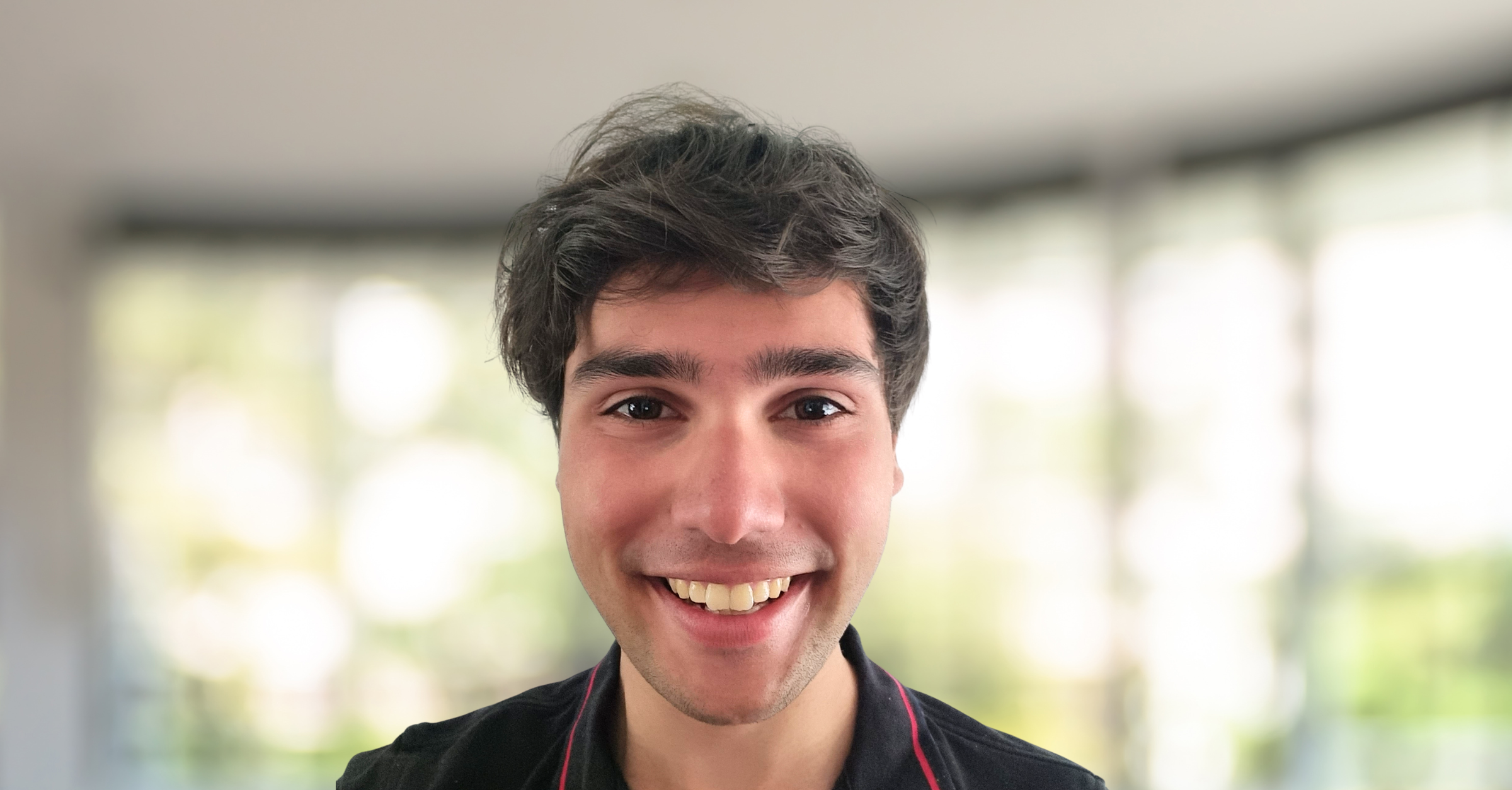
For Adelaide University Teaching Assistant and final-year engineering student Dylan Worswick, opportunities to contribute to South Australia’s defence and space sectors have begun well before graduation.
Born and raised in South Australia to UK- and Sri Lankan-born parents, Dylan developed an interest in aviation from an early age. That interest became a passion in 2011, when he witnessed the final launch of the Space Shuttle Discovery during a family trip to Florida.
Initially interested in becoming a pilot, Dylan’s career direction changed after he joined the FIRST Robotics Competition (FRC) program at high school.
The international program challenges students to design, build and program a robot to complete a new task each year. For Dylan, it provided early exposure to experienced mentors and showed him how different engineering disciplines could be brought together to solve a practical problem.
Dylan explained the importance of collaboration from a range of disciplines to achieve success, “You had to bring together the mechanical, electrical and software elements, work as a team and build something that could actually perform.”
The experience led him to pursue a double degree combining a Bachelor of Engineering (Honours) in Mechanical Engineering, majoring in Aerospace, with a Bachelor of Mathematical and Computer Sciences.
The combination has allowed him to develop skills across both hardware and software, something he believes is increasingly important when working on complex systems.
“Even if you are not directly working on the software, having an understanding of how it works is valuable,” Dylan said.
“It helps you collaborate with people across different disciplines and understand how all the parts of a system fit together.”
Throughout his studies, Dylan has actively sought opportunities to apply what he has learned beyond the classroom.
As part of the Adelaide University Motorsport Team, he contributed to the design and construction of an electric Formula Student racing car, working across aerodynamic simulation, computer-aided design and software development.
He also joined the university’s ADEPT Rocketry Team, where his team developed rocket design models and used simulation software to predict the flight performance of a Level 1 rocket, which was successfully launched at a test range near Mildura.
Dylan has also competed in the Warman Design and Build Competition, reaching the national competition as South Australian champions, and continues to give back to the FIRST Robotics Competition as a mentor to a high school team that has twice qualified for the World Championships in Houston.
These experiences have given him a practical understanding of how ideas move from early design through to construction, testing and refinement.
“You are not just learning the theory,” Dylan said. “You are designing, building and testing something from scratch, and seeing how your work affects the final result.”
Dylan’s studies have also opened the door to industry experience through internships with Saab Australia’s space team and South Australian mechanical design consultancy Applidyne.
At Saab Australia’s Lot Fourteen office, Dylan worked in a software role supporting space domain awareness, which involves tracking satellites and other objects in orbit and turning that data into useful information.
He was given responsibility for developing a self-contained monitoring page within a broader software system, including the initial design, mock-ups, user interface and implementation.
“It was a valuable opportunity to contribute to a real project and see how software is developed within a professional team.”
Dylan is now bringing his mechanical engineering, aerospace and software knowledge together through an industry-supported Honours project, ‘Long Endurance Electronic Decoy’.
Working with fellow students and South Australian radio-frequency company Solinnov, the project is exploring whether a tethered drone could provide a longer-endurance electronic decoy for naval assets.
For Dylan, studying in South Australia has provided opportunities to connect with local defence and space companies while still at university, giving him a chance to apply his skills to real projects and build industry experience before graduating.
After graduating, Dylan hopes to begin his career in mechanical engineering, putting the breadth of what he has learned into practice while continuing to build his skills and experience on the job.
He is drawn to the defence and space industries by the opportunity to work on advanced and meaningful projects while contributing to Australia’s national security.
“Over the course of one career, you could contribute to naval platforms, aircraft, space systems, radar or land-based capability,” Dylan said.
“The defence and space industries gives you the opportunity to work on cutting-edge technology and contribute to making Australia a safer place. That makes the work fulfilling both professionally and personally.”
Explore more of the Find Your Place website to discover career opportunities in South Australia’s defence and space sectors.
Published 18 August 2026
Explore More
Aidan’s path from international studies and law into export controls shows the breadth of careers in defence. Today, he helps organisations navigate complex requirements while supporting the responsible movement of sensitive technology.
Dylan is already building experience in defence and space before graduation. Through internships, technical teams and an industry-supported Honours project, he is applying his studies to real-world challenges.
Anita’s career has never followed a conventional path. Anita’s journey from the Australian Defence Force to ASC leader showcases the value of veteran transition into meaningful civilian careers.
What began as a childhood fascination with the cosmos has evolved into a stellar career in space engineering for Julia. metToday, she champions both innovation and inclusion – advocating for diversity across gender, backgrounds, ages and industries.